Refuge Denied: Why Britain's Asylum Framework Leaves Whistleblowers Without Protection

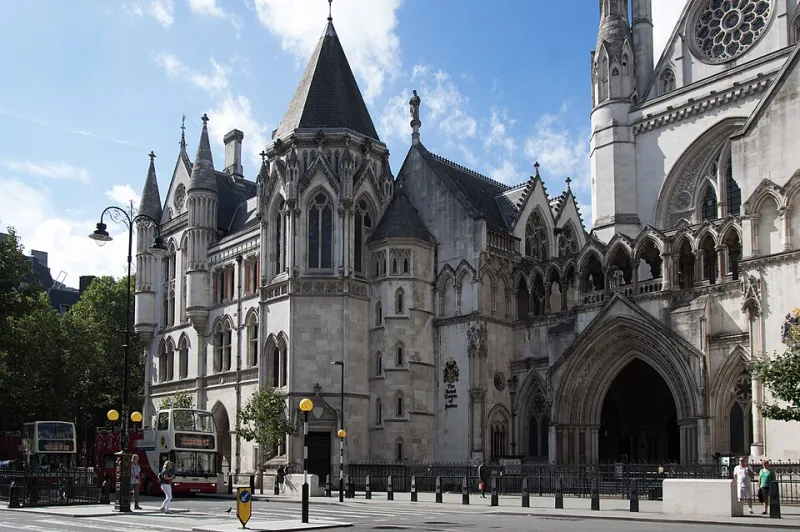
Photo by Photo by Caspar Rae on Unsplash on Unsplash
In April 2019, Chelsea Manning was denied entry to Canada. The episode drew widespread condemnation and renewed scrutiny of how liberal democracies treat those who have paid an enormous personal price for bringing classified wrongdoing into the public domain. Yet the United Kingdom, which might have offered an alternative haven, has remained conspicuously silent on the question of whether its own borders would be open to her — or to those who might follow in her footsteps.
That silence is itself instructive. It reflects not merely political caution but a structural reality: Britain's asylum and immigration system contains no meaningful provision for the whistleblower as a distinct category of persecuted person. The consequences of this gap extend far beyond any single individual.
The Rhetoric and the Reality
The United Kingdom has long presented itself as a defender of press freedom and political conscience. Ministers invoke the legacy of Magna Carta; parliamentarians cite the European Convention on Human Rights; government websites speak warmly of Britain's tradition of sheltering those fleeing persecution. Yet when the question moves from abstract principle to concrete application — when a whistleblower who has exposed war crimes arrives at a British port of entry — the machinery of the state tells a rather different story.
Under the 1951 Refugee Convention, to which the UK is a signatory, asylum protection is available to individuals who face persecution on grounds of race, religion, nationality, membership of a particular social group, or political opinion. Whistleblowers who have disclosed classified information frequently fall outside this framework in practice, even when their disclosures were motivated by genuine political conscience and their subsequent prosecution bears all the hallmarks of state retaliation.
The Home Office applies a narrow interpretive lens. Political opinion, as a protected ground, is construed conservatively. A soldier who leaks evidence of civilian casualties in an active theatre of war may be characterised not as a political actor but as a criminal who breached official secrecy obligations. The distinction, from the perspective of the persecuted individual, may feel academic — but in immigration law, it is determinative.
Manning's Case as a Mirror
Chelsea Manning's situation illuminates these structural failures with particular clarity. She was convicted under the Espionage Act of 1917 — legislation designed for a different era and a different kind of threat — for transmitting classified military and diplomatic records to WikiLeaks. Those records included the now-infamous Collateral Murder video, documenting the killing of civilians and journalists in Baghdad, as well as diplomatic cables that reshaped global understanding of American foreign policy.
Had Manning sought asylum in the United Kingdom during the period of her pre-trial detention or following her release, she would have confronted several formidable obstacles. First, the UK-US extradition treaty — the same instrument invoked in the ongoing proceedings against Julian Assange — would have created immediate legal jeopardy. Second, the Home Office would have been required to assess whether her prosecution constituted persecution within the meaning of the Refugee Convention, a determination that successive governments have been reluctant to make in cases involving allied nations. Third, and perhaps most damagingly, she carries a criminal conviction — a factor that triggers mandatory consideration of the 'serious non-political crime' exclusion clause under Article 1F of the Convention.
This last point deserves particular attention. The exclusion clauses were designed to prevent war criminals and terrorists from exploiting humanitarian protections. Their application to a person convicted of disclosing evidence of war crimes — rather than committing them — represents a grotesque inversion of the Convention's moral logic. Yet British immigration tribunals have shown little appetite for challenging such applications when they arise in politically sensitive contexts.
The Legislative Landscape
There have been periodic calls for reform. The Whistleblowing Commission, established by the charity Public Concern at Work (now Protect), produced a comprehensive report in 2013 recommending a new legal framework for whistleblower protection in employment contexts. More recently, parliamentarians have tabled questions about the adequacy of protections for national security whistleblowers. The Law Commission has examined aspects of the Official Secrets Act regime.
Yet none of this legislative activity has addressed the specific intersection of whistleblowing and immigration law. There is no equivalent of the German Bleiberecht provisions that might allow a whistleblower to remain in the country on humanitarian grounds pending a full assessment of their case. There is no fast-track mechanism for assessing claims from individuals whose disclosures have demonstrably served the public interest. There is no statutory definition of 'whistleblower' that carries weight in immigration proceedings.
Comparison with other jurisdictions is instructive. Germany granted Edward Snowden's lawyers permission to take testimony in Berlin, signalling at least a degree of institutional engagement with his situation. Iceland briefly considered legislation that would have created a 'whistleblower haven' framework. Switzerland's tradition of political asylum has, in certain cases, extended to individuals fleeing prosecution for politically motivated disclosures. The United Kingdom has pursued none of these approaches.
The Chilling Effect on Future Disclosures
The practical consequences of this legal vacuum extend beyond those already facing prosecution. When a serving intelligence analyst, military officer, or civil servant contemplates disclosing evidence of serious wrongdoing, the calculus they perform includes an assessment of what options will be available to them if things go wrong. If they conclude — correctly, on the current state of the law — that the United Kingdom offers no meaningful sanctuary, that assessment becomes one more reason to remain silent.
This is not a hypothetical concern. We know, from the testimony of those who have come forward, that the fear of isolation and statelessness weighs heavily on potential whistleblowers. The absence of a credible safe harbour in the UK does not merely disadvantage those who have already acted; it actively suppresses future disclosures that the public has a legitimate interest in receiving.
What Reform Must Look Like
A genuinely progressive approach to whistleblower asylum would require action on several fronts. Parliament should legislate to create a distinct immigration category for individuals who can demonstrate that their prosecution arose from good-faith disclosures of serious wrongdoing, and that the proceedings against them do not meet the standards of a fair trial under Article 6 of the ECHR.
The Home Office should issue binding guidance clarifying that politically motivated prosecution for whistleblowing activity may constitute persecution on grounds of political opinion, and that criminal convictions obtained through such proceedings should not automatically trigger exclusion clauses.
The UK should use its position in international forums — including the Council of Europe and the UN Human Rights Council — to advocate for an internationally agreed framework that recognises the whistleblower as a category of protected person deserving of refuge.
None of this is radical. It is the logical extension of commitments Britain has already made on paper. The question is whether the political will exists to honour those commitments in practice — or whether the United Kingdom will continue to offer sanctuary in rhetoric while closing its doors in law.
Chelsea Manning's story is not yet finished. But for the next person who faces the choice between conscience and safety, the framework we build today will determine whether Britain stands on the right side of that decision.