Can You Afford the Truth? A Practical Financial Guide for UK Whistleblowers

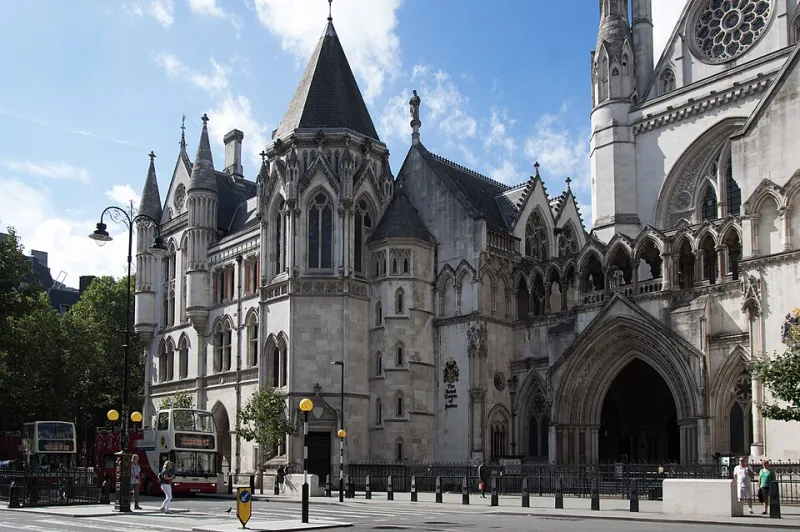
Photo: Warren LeMay from Cincinnati, OH, United States, CC0, via Wikimedia Commons
There is a particular cruelty in the economics of whistleblowing. The individuals who expose government misconduct, corporate fraud, or institutional abuse — the very people who perform one of democracy's most essential functions — frequently find themselves financially ruined for having done so. Legal fees accumulate. Employment evaporates. Savings are consumed. And the institutions they challenged, armed with public funds or corporate war chests, can sustain their defence indefinitely.
Chelsea Manning spent years in military detention before her sentence was commuted. The financial consequences of her disclosure — and the support networks that sustained those who advocated for her — taught the global civil liberties community hard lessons about the economics of truth-telling. In Britain, those lessons remain urgently relevant. If you are considering coming forward with information about wrongdoing, or if you are supporting someone who is, this guide is intended to help you understand what you may be facing — and where support can be found.
Understanding the True Cost of Disclosure
The financial impact of whistleblowing rarely arrives as a single, predictable bill. It accumulates in stages, often beginning before any formal legal proceedings are initiated.
Loss of employment is frequently the first and most immediate consequence. Even where whistleblowers are nominally protected under the Public Interest Disclosure Act 1998 (PIDA), enforcing those protections requires bringing a claim before an Employment Tribunal — a process that can take 18 months or more, during which the individual may have no income. Research by the whistleblowing charity Protect (formerly Public Concern at Work) has found that the majority of whistleblowers who suffer detriment never fully recover their pre-disclosure earning capacity.
Legal representation is the second major cost centre. Solicitors specialising in whistleblower cases — particularly those involving national security, data protection, or complex employment law — charge rates that can reach £300 to £500 per hour in London. A contested Employment Tribunal claim, from initial advice through to hearing, might cost between £15,000 and £50,000 in legal fees alone, depending on complexity. Cases involving criminal charges, extradition proceedings, or judicial review are substantially more expensive still.
Reputational damage and its economic consequences are harder to quantify but no less real. Many whistleblowers find that, even after legal proceedings conclude, they face sustained difficulty in returning to their professional field. References are withheld. Networks close. In sectors with security clearance requirements, a whistleblowing history can effectively end a career.
Mental health and wellbeing costs — therapy, medical treatment, the impact of prolonged stress on physical health — add further financial pressure, particularly for those without access to comprehensive NHS support or private health insurance.
What Legal Aid Actually Covers
Legal aid in England and Wales has been substantially curtailed since the Legal Aid, Sentencing and Punishment of Offenders Act 2012 (LASPO). For whistleblowers, this matters enormously.
Employment Tribunal claims are not covered by legal aid. This means that the most common legal route available to a whistleblower who has suffered dismissal or detriment must be funded privately, through a conditional fee arrangement (sometimes called a 'no win, no fee' agreement), or not at all.
Criminal defence, where a whistleblower faces prosecution under the Official Secrets Acts or related legislation, may attract legal aid — but eligibility is means-tested, and the threshold is strict. Those with savings or property may find themselves ineligible, even if their liquid income has been eliminated by the very circumstances of their disclosure.
Judicial review proceedings — relevant where a whistleblower challenges a public body's decision — technically remain within the legal aid scope, but funding is increasingly difficult to secure and is subject to a merits test that can be difficult to satisfy in novel or politically sensitive cases.
The practical upshot is that most whistleblowers in the UK cannot rely on legal aid as a primary source of financial support for their legal battles. Alternative funding strategies are not optional; they are essential.
Conditional Fee Arrangements and Their Limitations
Many employment solicitors will consider taking whistleblower cases on a 'no win, no fee' basis, particularly where the factual basis for a PIDA claim appears strong. This can significantly reduce upfront costs, though it is important to understand what such arrangements do and do not cover.
Under a conditional fee arrangement (CFA), the solicitor agrees to waive their fee if the case is unsuccessful, but will charge an uplift — typically up to 100% of their standard fee — if the case succeeds. The client remains responsible for disbursements (court fees, expert witness costs, barrister's fees) regardless of outcome, unless after-the-event (ATE) insurance is obtained.
ATE insurance, which covers legal costs if a case is lost, is available for employment claims but can be expensive and may not be offered where the insurer assesses the risk as too high. Whistleblower cases, which often involve factually complex or politically sensitive circumstances, can be difficult to insure.
For cases involving criminal charges or national security dimensions — the territory most relevant to those whose disclosures resemble Manning's or Assange's — conditional fee arrangements are rarely available. These cases require upfront funding, and substantial amounts of it.
Crowdfunding: Lessons from High-Profile Cases
Crowdfunding has become an increasingly important tool for whistleblowers and their supporters. The campaigns mounted on behalf of Julian Assange's legal defence, and the fundraising efforts of organisations supporting Chelsea Manning, demonstrated both the potential and the limitations of this approach.
On the positive side, crowdfunding can mobilise significant sums quickly when a case captures public attention. It builds community solidarity, raises awareness, and can sustain legal battles that would otherwise collapse for lack of funds. The Assange legal defence fund raised millions of pounds globally over several years.
However, crowdfunding is not a reliable or sustainable primary funding mechanism for most whistleblowers. Cases that do not attract significant media coverage — which is the majority — rarely generate meaningful crowdfunding income. Platforms take a percentage of funds raised. Tax treatment of crowdfunded legal support can be complex. And the emotional labour of running a public fundraising campaign, often while simultaneously managing legal proceedings and personal crisis, can be overwhelming.
If you are considering crowdfunding as part of your financial strategy, the following practical points are worth bearing in mind:
- Choose your platform carefully. GoFundMe, Crowdfunder, and CrowdJustice (which specialises in legal cases) each have different fee structures and audience demographics. CrowdJustice in particular has experience with whistleblower and civil liberties cases.
- Invest in your campaign narrative. Campaigns that clearly explain the public interest dimension of the disclosure, and that connect the individual's story to broader principles of accountability, consistently outperform those that focus solely on personal hardship.
- Engage established networks. Organisations such as Protect, Liberty, Reprieve, and this organisation can amplify crowdfunding campaigns to audiences already sympathetic to whistleblower rights.
- Be transparent about how funds will be used. Donors to legal campaigns want to know that their contributions are directed to legal fees, not general living expenses. Clear, specific cost breakdowns build confidence.
Organisations That Can Help
Several UK-based organisations offer practical support to whistleblowers, beyond simply signposting legal aid.
Protect (protect-advice.org.uk) provides a free, confidential advice line for workers considering disclosure, and can assist with understanding PIDA protections and Employment Tribunal processes. Their casework team has experience across a wide range of sectors.
Liberty (libertyhumanrights.org.uk) focuses on civil liberties and human rights cases, and has taken on a number of cases with whistleblower dimensions, particularly where state power is implicated.
Reprieve (reprieve.org.uk) specialises in cases involving state overreach, including national security matters, and has been involved in cases with direct relevance to the Manning and Assange precedents.
The National Union of Journalists (nuj.org.uk) provides legal support to journalists who work with whistleblowers and face legal action as a result, and has an established legal defence fund.
UK Friends of Bradley Manning maintains a network of supporters and can provide guidance on connecting with relevant legal and financial support, particularly for cases with a national security or international dimension.
Before You Come Forward: A Financial Checklist
For anyone at the point of deciding whether to disclose wrongdoing, the following steps can help clarify the financial landscape before a decision is made:
- Seek confidential legal advice first. Many solicitors will offer an initial consultation at reduced cost or free of charge. Understanding your specific legal position before acting can prevent costly mistakes.
- Document everything. Evidence of the wrongdoing you intend to disclose, and of any detriment you subsequently suffer, is the foundation of any legal claim. Secure copies of relevant documents in a safe location outside your employer's systems.
- Assess your financial runway. How long can you sustain yourself without income? What assets, savings, or support networks are available to you? Honest answers to these questions will shape your strategy.
- Explore union membership. If you are a member of a trade union, legal representation in employment matters may be available as part of your membership. If you are not a member, joining before making a disclosure may be worthwhile — though unions are alert to attempts to join solely for legal cover.
- Connect with support organisations before you act. The organisations listed above can provide guidance that shapes your approach and potentially reduces your exposure. Isolation is one of the greatest risks facing whistleblowers; seek community early.
The Broader Principle
The financial barriers facing UK whistleblowers are not accidental. They are, in significant part, the product of deliberate policy choices — the gutting of legal aid, the absence of a meaningful public interest defence, the failure to extend PIDA protections to national security disclosures. These choices have a chilling effect that serves the interests of those who benefit from secrecy.
Chelsea Manning's sacrifice reminded the world that truth-telling has a price. Our task — as advocates, as a community, and as citizens — is to ensure that price is not borne by brave individuals alone. Financial solidarity with whistleblowers is not charity. It is a democratic obligation.