Courtrooms as Crucibles: How Britain's Legal System Is Defining the Future of Whistleblower Justice
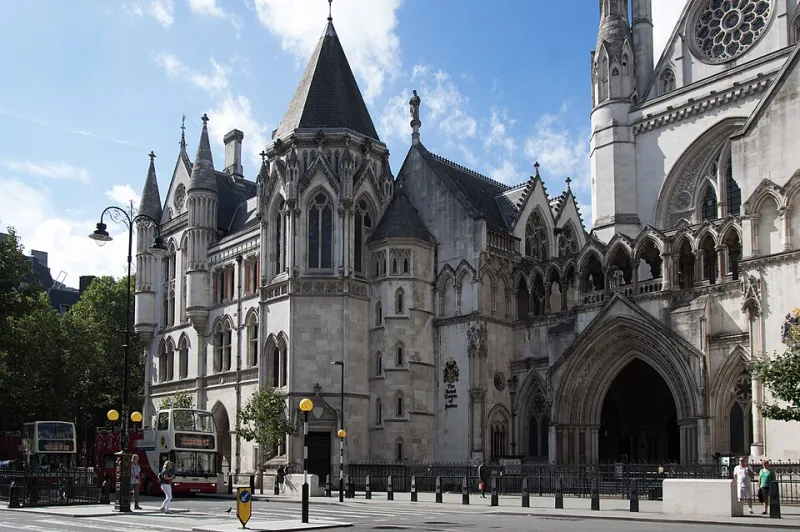
Photo: Bjørn Erik Pedersen, CC BY-SA 4.0, via Wikimedia Commons
When Chelsea Manning was sentenced to 35 years in a US military prison in August 2013, the reverberations were felt far beyond Fort Meade. In Britain, activists, legal scholars, and civil liberties organisations recognised immediately that what had transpired in an American courtroom carried profound implications for anyone who might one day choose to expose wrongdoing on either side of the Atlantic. The Manning case did not merely punish one individual; it announced, with unmistakable clarity, how powerful states intended to treat those who illuminated their secrets.
More than a decade on, British courts have themselves become the stage upon which that contest continues. The prolonged legal battle over Julian Assange's extradition — stretching from his arrest at the Ecuadorian Embassy in 2019 through successive hearings at Westminster Magistrates' Court, the High Court, and ultimately the Supreme Court — has transformed the UK judiciary into a focal point for the global whistleblower rights movement. Understanding how we arrived here, and what the accumulated precedents mean for future truth-tellers, is not merely an academic exercise. It is a matter of urgent democratic consequence.
The Manning Case and Its British Echoes
Chelsea Manning never stood in a British dock. Yet her case cast a long shadow over UK legal and political discourse. The documents she disclosed to WikiLeaks — including the now-infamous 'Collateral Murder' video and the Afghan and Iraq war logs — were published and widely discussed in Britain, implicating UK forces and UK government decisions. British journalists reported on those materials. British citizens read them. And British politicians, by and large, remained silent about the treatment of the person who had made that accountability possible.
What the Manning prosecution established, in the view of many legal observers, was a template: that whistleblowing conducted in the public interest offered no reliable shield against prosecution under national security statutes. This message was absorbed not only by would-be whistleblowers but by the legal community advising them. Solicitors in Britain began counselling clients with greater caution. The chilling effect was real, measurable, and rarely acknowledged by those in power.
The Assange Proceedings: A British Legal Saga
If Manning's case was the prologue, the Assange extradition hearings have been the main event — at least as far as British courts are concerned. The proceedings that unfolded at Woolwich Crown Court and the Old Bailey between 2019 and 2024 constituted one of the most consequential legal contests over press freedom and whistleblower protection that this country has witnessed in the modern era.
District Judge Vanessa Baraitser's January 2021 ruling — blocking extradition on the grounds that Assange's mental health made him a suicide risk in the American prison system — was widely misread as a victory for civil liberties. In fact, the judgment was deeply troubling for those concerned with principled whistleblower protection. Judge Baraitser explicitly rejected the argument that Assange's disclosures were protected political speech, and declined to find that the US prosecution was politically motivated. The protection offered was humanitarian, not principled. It was a narrow ledge, not a firm foundation.
Subsequent High Court rulings, which initially reversed the extradition block before the matter wound its way further through the appellate system, demonstrated just how precarious that ledge was. Each hearing reinforced a sobering reality: British courts were willing to engage with procedural and humanitarian arguments, but remained deeply reluctant to enshrine a robust, substantive right to whistleblowing as a legal defence.
Landmark Decisions and Their Limitations
Beyond the Assange proceedings, a series of domestic cases has further shaped the landscape. The prosecution of GCHQ whistleblower Katharine Gun — who leaked evidence of a US-UK intelligence operation designed to manipulate UN Security Council votes ahead of the Iraq invasion — remains one of the most instructive episodes in recent British legal history. The charges against Gun were ultimately dropped in 2004, but not because the court vindicated her actions. The prosecution collapsed, many believe, because the government feared that a full trial would require the disclosure of the legal advice Tony Blair's government had received on the legality of the Iraq war.
Gun was not acquitted on principle. She was spared by political calculation. The distinction matters enormously. It illustrates that British law, as currently constituted, offers whistleblowers no reliable safe harbour — only the occasional fortunate accident of prosecutorial discretion.
The Public Interest Disclosure Act 1998 (PIDA), often cited as the UK's primary whistleblower protection statute, was designed principally to protect employees who report wrongdoing through internal or regulatory channels in workplace contexts. It was never conceived as a shield for those who disclose classified national security information to journalists or the public. The gap between what PIDA covers and what genuine accountability sometimes demands is vast, and Parliament has shown little appetite for closing it.
Parliament's Persistent Failure
That parliamentary reluctance is not accidental. It reflects a structural deference to executive authority on matters of national security that cuts across party lines. Successive governments — Conservative, Labour, and coalition alike — have resisted meaningful reform of whistleblower protections, arguing that existing frameworks are adequate and that stronger protections would compromise intelligence capabilities or undermine the rule of law.
Public opinion tells a different story. Polling conducted in the years following the Snowden revelations consistently showed that a majority of British people believed journalists and their sources should be protected when publishing information that serves the public interest. The gap between popular sentiment and legislative reality is striking, and it speaks to a democratic deficit that this organisation has long sought to highlight.
The Law Commission's 2020 review of the Official Secrets Acts recommended a public interest defence for disclosures made in certain circumstances — a modest but meaningful reform. The government's response has been, at best, glacial. The National Security Act 2023, which replaced the Official Secrets Act 1989, introduced no such defence. In some respects, legal scholars argue, it made the position of whistleblowers and the journalists who work with them more precarious than before.
What the Precedents Mean for Tomorrow's Truth-Tellers
For anyone contemplating disclosure of wrongdoing that touches on national security, defence, or intelligence matters, the accumulated weight of British legal precedent offers cold comfort. The courts have demonstrated that they will apply humanitarian considerations in extremis, and that procedural irregularities can sometimes derail prosecutions. But they have not established that speaking truth to power is, in itself, a legally protected act.
This is the inheritance of the Manning era: a legal landscape in which conscience is not a defence, in which the public interest must be weighed against state secrecy by judges who are themselves constrained by statutes that favour the latter, and in which the personal cost of disclosure — in liberty, livelihood, and wellbeing — remains catastrophically high.
At UK Friends of Bradley Manning, we believe this must change. The courage Chelsea Manning demonstrated, and the price she paid, demands a legal framework worthy of the values she acted upon. British courts have been the battleground. It is long past time for Parliament to provide the protection that justice requires.
A Call for Legislative Action
The path forward is not mysterious. A statutory public interest defence for whistleblowers — one that applies across the full spectrum of disclosure, not merely in workplace settings — is achievable and necessary. Independent oversight of prosecutorial decisions in national security cases would provide a meaningful check on executive overreach. Strengthened legal aid provisions for those facing disclosure-related prosecutions would ensure that access to justice does not depend on personal wealth.
These are not radical proposals. They are the minimum that a democracy serious about accountability should provide. The courtrooms have spoken, imperfectly and inconsistently. Now it is Parliament's turn.