What Whitehall Knew: Tracing Britain's Hidden Complicity in the Crimes Chelsea Manning Exposed
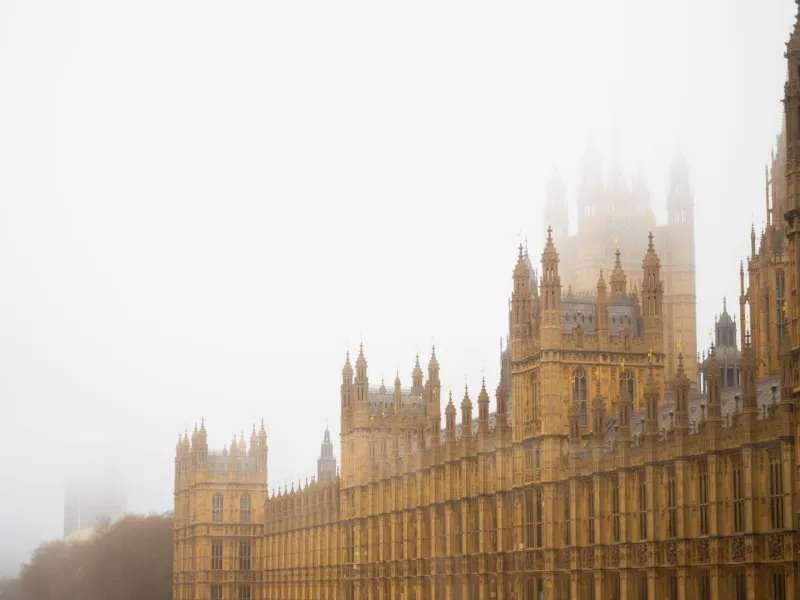
When Chelsea Manning transferred hundreds of thousands of diplomatic cables, battlefield logs, and intelligence assessments to WikiLeaks in 2010, the shockwaves were felt far beyond Washington. In Westminster, ministers scrambled. In Whitehall, civil servants reached for their classification stamps. And in the years that followed, a quiet but determined effort was made to ensure that Britain's own role in the events Manning had illuminated would remain, as far as possible, beyond public scrutiny.
More than a decade on, that effort has been only partially successful. Through a combination of Freedom of Information requests, parliamentary questions, and the painstaking work of investigative journalists and civil liberties researchers, fragments of the British government's knowledge and involvement have surfaced. What those fragments reveal is deeply uncomfortable — and what continues to be withheld may be more uncomfortable still.
The Paper Trail That Whitehall Would Rather You Did Not Follow
The Manning disclosures encompassed material that directly implicated British foreign and military policy. The Iraq War Logs, released in October 2010, contained detailed records of civilian casualties, unlawful detention practices, and the systematic failure of coalition forces — including British troops — to investigate credible allegations of abuse by Iraqi security services. The diplomatic cables, released weeks later, included candid assessments of British officials by their American counterparts, and vice versa, offering an unvarnished view of the transatlantic relationship that no government press release had ever provided.
FOI requests submitted in the years following the initial disclosures have produced a patchwork of partially released documents. Correspondence between the Foreign and Commonwealth Office and the United States Embassy in London, released only after sustained legal pressure, revealed that British officials were briefed on the scale of the WikiLeaks disclosures within hours of their publication — and that early internal communications focused not on the substance of what had been revealed, but on managing the diplomatic fallout and coordinating messaging with Washington.
Those same documents were released with substantial redactions. Entire paragraphs, in some cases entire pages, were blanked out under exemptions relating to national security, international relations, and — most frequently — the catch-all provision that disclosure would prejudice the effective conduct of public affairs. Critics have long argued that these exemptions are applied not to protect genuine security interests, but to shield officials from accountability.
Parliamentary Questions and the Limits of Scrutiny
In the months following the disclosures, a number of MPs — principally from the Liberal Democrat benches and the then-nascent Green Party, though some Labour backbenchers also pressed the matter — submitted written parliamentary questions seeking clarity on what ministers had known about the practices Manning exposed, and when. The answers they received were, without exception, carefully circumscribed.
When asked directly whether British military personnel had witnessed or reported incidents consistent with those documented in the Iraq War Logs, ministers replied that operational matters were kept under review and that all allegations were taken seriously. When pressed on the specific question of whether the Ministry of Defence had received intelligence, prior to the WikiLeaks publication, indicating that Iraqi detainees were being tortured with the knowledge of coalition forces, the response was that it would not be appropriate to comment on intelligence matters.
The Foreign Affairs Select Committee conducted its own inquiry into the diplomatic implications of the disclosures in 2011. The resulting report acknowledged that the cables had caused significant embarrassment and had complicated a number of bilateral relationships. It did not, however, address the substantive question of whether the conduct revealed in those cables — including British complicity in rendition flights and the facilitation of interrogation techniques that fell well short of legal standards — merited independent investigation. That question was raised in committee evidence by human rights organisations including Reprieve and Liberty. It was not reflected in the final report's recommendations.
The Classification Architecture and Its Discontents
Understanding what Britain continues to withhold requires some familiarity with the classification architecture that governs official documents. The UK employs a tiered system — Official, Secret, and Top Secret — with additional handling caveats that can restrict access even within government. Documents shared between British and American intelligence services are frequently subject to originator-controlled classifications, meaning that Whitehall cannot release them unilaterally even when a domestic FOI request demands it.
This architecture has been used, with some legal justification but considerable political convenience, to place a significant portion of the Manning-related documentary record beyond the reach of domestic transparency law. When the Information Commissioner's Office has been asked to adjudicate on disputed FOI refusals relating to this period, it has generally — though not universally — deferred to the government's national security assessments.
The result is a documentary record that is, at best, fragmentary. Researchers and journalists working in this area speak of a deliberate strategy of attrition: releasing enough to appear cooperative whilst withholding enough to prevent any coherent picture from emerging. Each successful FOI request generates new questions, and those questions generate new refusals.
What the Released Material Does Tell Us
Despite these obstacles, the available record is not without significance. Declassified briefing papers confirm that senior FCO officials were aware, well before the Manning disclosures, of concerns about detention conditions in facilities used by coalition forces in Iraq. Internal legal advice, partially released following litigation by the human rights organisation Public Interest Lawyers, indicated that some officials harboured private doubts about the legality of certain intelligence-sharing arrangements — doubts that were never translated into formal policy challenges or public disclosure.
The Manning cables also revealed that British diplomats had provided assessments of their own government's positions that were, to put it charitably, more candid in private than in public. On issues ranging from the conduct of the Afghan war to the treatment of Guantánamo detainees, the gap between what ministers said in the Commons and what their officials wrote in classified cables was, in some instances, considerable.
For supporters of Chelsea Manning, this is precisely the point. The disclosures did not merely embarrass governments; they demonstrated, with documentary precision, the distance between official narrative and operational reality. That Britain has spent the intervening years working to obscure rather than reckon with that distance is, in itself, a form of institutional confession.
The Accountability That Never Came
No British minister has faced formal accountability for the conduct revealed in the Manning disclosures. No public inquiry has been convened specifically to examine the gap between what officials knew and what they told Parliament. The Iraq Historic Allegations Team, established to investigate abuse claims arising from the Iraq conflict, was shut down in 2017 amid controversy — having, its critics argued, been deliberately starved of resources and political support.
For those of us who stand with Chelsea Manning and with the broader principle that official wrongdoing must be exposed and answered for, the redacted documents are not merely an archival curiosity. They are evidence of a system that punishes those who reveal the truth whilst protecting those who perpetrated — or enabled — the abuses that truth revealed.
The fight for full disclosure continues. FOI litigation is ongoing. Parliamentary campaigners have not abandoned the field. And the documentary record, however incomplete, already tells us enough to know that Whitehall's silence is not the silence of innocence.