Paper Trails and Police Powers: How Freedom of Information Became a Weapon Against Unlawful Surveillance in Greater Manchester
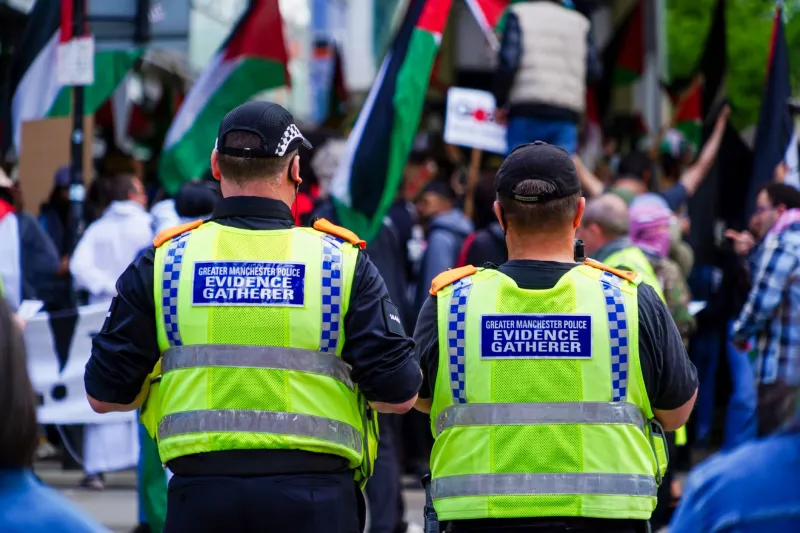
The story of how systemic surveillance abuse came to light in Greater Manchester did not begin with a whistleblower risking imprisonment, nor with a journalist cultivating a source inside the force. It began, rather more modestly, with a spreadsheet, a postage stamp, and a carefully worded letter submitted under the Freedom of Information Act 2000. What followed over the next several years was a masterclass in civic persistence — and a sobering reminder of just how much unlawful state activity can be concealed behind the bureaucratic language of "operational necessity."
For those of us who have spent years studying the consequences that befell Chelsea Manning for exposing what powerful institutions preferred to keep hidden, there is something both instructive and quietly moving about campaigns that pursue accountability through entirely lawful means. The Manchester case demonstrates that the architecture of transparency, imperfect and frequently obstructed as it is, can still be made to yield results — provided that those who deploy it are sufficiently methodical, patient, and resistant to institutional discouragement.
The Campaign That Refused to Accept Redactions
The civil liberties campaigners at the centre of this investigation — a loose coalition of privacy advocates, community organisers, and legal researchers based across Greater Manchester — began their FOIA campaign after local journalists reported anomalies in the force's use of directed surveillance authorisations. Rather than accepting the fragmentary picture offered by press coverage, the group resolved to obtain primary documentation directly from the force.
Their initial requests were met with the standard repertoire of evasions: public interest exemptions invoked under Section 31 of the FOIA (law enforcement), blanket refusals citing Section 23 (security bodies), and, on several occasions, the claim that the information requested simply did not exist in a retrievable form. Each refusal was itself instructive. Experienced FOIA practitioners understand that the shape of a refusal often tells you as much as the information withheld — an institution that claims a document does not exist, and then later produces it under tribunal order, has revealed something important about its relationship with the truth.
The campaigners filed internal review requests after every refusal, exhausting the force's own complaints process before escalating to the Information Commissioner's Office. This procedural discipline was not merely bureaucratic fastidiousness; it was strategic. Tribunals look unfavourably upon applicants who have not followed proper channels, and the group understood that their credibility before an adjudicating body depended upon demonstrating that every avenue short of external adjudication had been pursued in good faith.
What the Tribunal Rulings Revealed
When the First-tier Tribunal (Information Rights) eventually considered the accumulated body of refused requests, its findings were striking. Surveillance authorisation records disclosed under order revealed that the force had, on multiple occasions, authorised directed surveillance operations against individuals without adequate justification, failed to maintain the statutory review schedules required under the Regulation of Investigatory Powers Act 2000, and in several instances continued surveillance beyond the period authorised — a practice that renders the entire operation unlawful regardless of its original justification.
Perhaps most significantly, the tribunal found evidence that certain authorisations had been retrospectively amended in the force's internal records — a finding with implications that extend well beyond procedural irregularity. Retrospective amendment of surveillance records is not merely an administrative failing; it is the kind of conduct that, if proven in a criminal context, would constitute perversion of the course of justice.
The tribunal's rulings did not, it must be said, result in prosecutions. They rarely do. But they established a documented public record of unlawful conduct that the force could no longer suppress, and they created the evidentiary foundation for civil claims by individuals who had been subjected to unlawful surveillance — claims that several affected parties are now pursuing through the Investigatory Powers Tribunal.
Why Greater Manchester Is Almost Certainly Not Exceptional
It would be comforting to believe that what was uncovered in Greater Manchester represents an isolated failure of governance in a single constabulary. The evidence strongly suggests otherwise. The Surveillance Camera Commissioner's annual reports have for years noted inconsistent compliance with authorisation requirements across forces in England and Wales. The Investigatory Powers Commissioner's Office, which assumed oversight responsibilities following the Investigatory Powers Act 2016, has similarly documented recurring failures — though its reports are characteristically circumspect in naming specific forces.
The structural conditions that permitted abuse in Greater Manchester — inadequate oversight of authorisation processes, a culture of internal deference that discourages challenge from within, and a freedom of information regime that forces applicants to fight for every document — are replicated to varying degrees across every constabulary in the country. What the Manchester campaign demonstrated is not that one force was uniquely corrupt, but that sustained, methodical external pressure can surface what internal mechanisms consistently fail to detect.
A Practical Framework for Your Own FOIA Investigation
For readers who wish to undertake similar investigations in their own regions, the Manchester campaign offers several transferable lessons.
Begin with specificity. Vague requests invite vague refusals. Rather than asking for "all documents relating to surveillance," request specific categories of record — for example, "all directed surveillance authorisation forms submitted under Section 28 of RIPA between [date range], including any amendments made after initial submission." Specificity makes it harder for a force to claim the information does not exist in a retrievable form.
Build a request sequence, not a single request. The Manchester campaigners did not attempt to obtain everything at once. They constructed a logical sequence of requests, each informed by what the previous one had — and had not — disclosed. This approach allows you to map the contours of an institution's record-keeping and identify the points at which its account of events becomes internally inconsistent.
Use refusals as intelligence. When a force invokes a particular exemption, note it carefully. Section 31 (law enforcement) and Section 30 (investigations) are the most commonly invoked exemptions in police FOIA responses. Both are subject to a public interest test, which means the Information Commissioner and tribunals are required to weigh the harm of disclosure against the public benefit of transparency. Refusals that rely on these exemptions are challengeable, and the public interest in exposing unlawful conduct is substantial.
Document everything and share widely. The Manchester campaigners maintained meticulous records of every request, every refusal, and every internal review. They also published their correspondence openly, which served two purposes: it deterred the force from misrepresenting the exchange in subsequent proceedings, and it allowed other researchers and journalists to build upon their work.
Connect with specialist support organisations. The Open Rights Group, Liberty, and Big Brother Watch all have experience supporting FOIA campaigns targeting surveillance abuses. The legal charity Reprieve has particular expertise in matters touching on intelligence and policing. You should not attempt a sustained campaign of this nature without access to legal guidance.
The Broader Lesson
Chelsea Manning paid an extraordinary personal price to place evidence of state wrongdoing into the public record. The campaigners in Greater Manchester paid in a different currency — years of their time, considerable frustration, and the particular exhaustion that comes from forcing a bureaucracy to account for itself one refused request at a time. Both forms of courage matter. Both are necessary.
The Freedom of Information Act is an imperfect instrument, chronically underfunded in its enforcement and routinely abused by the institutions it is meant to regulate. But it remains, for the moment, a lawful and accessible means by which ordinary citizens can compel the state to account for its conduct. In a political environment that grows less hospitable to dissent with each passing year, that is not nothing. It is, in fact, the kind of tool that those of us committed to transparency and accountability have an obligation to use — and to use well.