A Soldier's Disclosure, a Parliament's Awakening: How Chelsea Manning Reshaped British Democratic Oversight
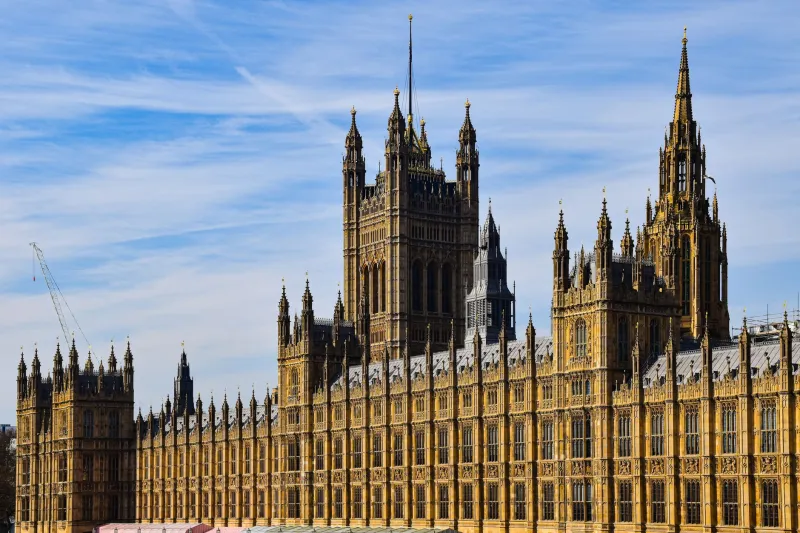
In the summer of 2010, a young United States Army intelligence analyst made a decision that would alter the course of modern democratic history. Chelsea Manning — then known publicly by her birth name — transferred an extraordinary volume of classified material to WikiLeaks, including the now-infamous Collateral Murder footage, the Afghan and Iraq War Logs, and a tranche of diplomatic cables that illuminated the private machinations of governments across the globe. Her subsequent arrest, prosecution, and thirty-five year sentence were, on their surface, an American legal matter. Yet the consequences reverberated through the corridors of Westminster with a force that British parliamentarians could neither ignore nor easily contain.
To understand why Manning's case matters to British democratic life, one must first appreciate the structural peculiarity of intelligence oversight in the United Kingdom. For decades, the Intelligence and Security Committee (ISC) — the parliamentary body nominally responsible for scrutinising MI5, MI6, and GCHQ — operated in conditions of near-total opacity. Its members were appointed by the Prime Minister rather than elected by their peers, its proceedings were conducted in secret, and its published reports were routinely redacted to the point of meaninglessness. Parliament, in short, was permitted to know very little.
The Cables That Landed on Westminster's Doorstep
The diplomatic cables released by Manning and published through WikiLeaks beginning in November 2010 did not merely embarrass foreign governments. Several cables contained candid assessments of British ministers, officials, and policy positions — assessments that the Foreign and Commonwealth Office had never intended elected representatives to read. Parliamentarians who encountered these documents through the press found themselves in the paradoxical position of being better informed by a whistleblower's disclosures than by the official briefings their own government had provided.
The Foreign Affairs Select Committee moved swiftly. In early 2011, committee members began pressing ministers on the reliability of information flowing through official channels, directly referencing the divergence between publicly stated policy and the private candour revealed in the cables. The questions were pointed: if the executive could maintain such a significant gap between what it told Parliament and what it actually believed, what did that imply for the integrity of parliamentary scrutiny itself?
This was not merely procedural discomfort. It struck at the constitutional heart of the Westminster model. The doctrine of ministerial accountability rests on the premise that ministers answer truthfully to the House. Manning's disclosures offered documented evidence — not allegation, but evidence — that this premise was, at minimum, aspirational.
The ISC Reform Debate and Its Unacknowledged Catalyst
The years between 2010 and 2013 saw mounting pressure for reform of the Intelligence and Security Committee's powers and composition. The Justice and Security Act 2013, which substantially restructured the ISC, is typically discussed in the context of domestic concerns about the committee's handling of rendition inquiries. However, the broader climate of disclosure — shaped considerably by the Manning case and the public appetite it generated for governmental transparency — provided the political oxygen that reformers required.
Campaigners and legal analysts who gave evidence to parliamentary consultations during this period frequently cited the Manning prosecutions as a cautionary illustration of what happens when oversight mechanisms fail. The argument ran as follows: when legitimate channels for surfacing wrongdoing are inadequate, individuals of conscience will resort to unilateral disclosure. The remedy, therefore, was not harsher prosecution of whistleblowers but more robust parliamentary mechanisms capable of receiving and acting upon sensitive information before it reached crisis point.
The 2013 Act did grant the ISC greater investigatory powers and moved it formally within the parliamentary estate rather than the Cabinet Office. These were not trivial changes. Yet critics — including several who testified before the committee in subsequent years — argued that the reforms remained insufficient, and that the Manning case demonstrated the scale of ambition that genuine oversight reform required.
What Parliament Was Permitted to Know — and What It Wasn't
One of the most revealing parliamentary episodes connected to the Manning disclosures concerned the Collateral Murder video, which depicted a 2007 US helicopter attack in Baghdad that killed two Reuters journalists alongside a number of Iraqi civilians. When British parliamentarians sought briefings on UK involvement in, or awareness of, comparable incidents in Iraq and Afghanistan, they encountered the familiar architecture of official resistance: public interest immunity certificates, national security exemptions, and ministerial statements of studied vagueness.
The Defence Select Committee's inquiries into rules of engagement and civilian casualty reporting in Afghanistan — pursued with renewed vigour after the War Logs' publication — repeatedly bumped against the limits of what the executive was prepared to disclose. Hansard records from 2011 and 2012 reveal exchanges in which committee chairs explicitly noted the disparity between information available through leaked documents and information provided through official channels. The implication, stated with parliamentary decorum but unmistakable clarity, was that elected representatives were being kept less informed than newspaper readers.
This is the Manning effect in its most concrete British manifestation: not a revolution, but a ratchet. Each disclosure, each prosecution, each parliamentary exchange in which a minister deflected a question answered more fully by a WikiLeaks cable, advanced public and parliamentary understanding of the structural deficits in democratic accountability.
Conscience as Constitutional Pressure
It would be an overstatement to credit Chelsea Manning with single-handedly reforming British parliamentary oversight. The forces resisting transparency are durable, well-resourced, and institutionally entrenched. What Manning's case accomplished — alongside those of other whistleblowers whose disclosures overlapped with this period — was to make the cost of opacity visible.
British parliamentarians who engaged seriously with the Manning disclosures were confronted with a choice: treat the material as contaminated by its irregular origin and refuse to act upon it, or acknowledge that the information it contained was relevant to their constitutional duties regardless of how it arrived. Many chose the former. A significant minority chose the latter, and their questions, motions, and committee reports constitute a body of democratic work that deserves recognition.
The Intelligence and Security Committee's 2018 report on Russia, the Foreign Affairs Committee's sustained attention to drone strike accountability, and the ongoing parliamentary campaign for a public interest defence in the Official Secrets Act all carry, in their DNA, the influence of a generation of disclosures that Manning's case inaugurated.
The Unfinished Argument
Chelsea Manning served seven years before President Obama commuted her sentence in January 2017. She was subsequently re-imprisoned for refusing to testify before a grand jury investigating WikiLeaks. Through all of it, British parliamentarians continued to debate, in terms she made unavoidable, the boundaries of legitimate secrecy.
The argument is unfinished. The Official Secrets Act 1989 still contains no public interest defence. The ISC still operates with constraints that no equivalent body in a comparable democracy would accept. Ministers still invoke national security to foreclose parliamentary questions that touch on intelligence matters.
But Parliament asks more than it once did. It asks, in part, because Chelsea Manning made the cost of not asking impossible to ignore. That is not a small thing. For those of us who stand with whistleblowers and defend the truth, it is, in fact, the point.